How to Choose the Right Precision Stepper Motor in 2026?

Time:2026-09-12 Author:Madeline
0%

Choosing the right Precision Stepper Motor in 2026 requires more than comparing torque ratings. Industrial automation is becoming faster and more demanding. The International Federation of Robotics reported 541,302 industrial robots were installed worldwide in 2023, a 10% annual increase. Each robot, conveyor, inspection stage, and medical actuator demands predictable motion. Small positioning errors can create visible defects, especially when a carriage moves under a microscope or a belt stops beside a 0.1-millimeter mark.

Market research from MarketsandMarkets and Grand View Research indicates steady growth in the global stepper motor sector. Their forecasts connect this growth with factory automation, electronics manufacturing, packaging, and compact medical equipment. Yet market growth does not guarantee a universal motor choice. That assumption deserves questioning. A high-torque model may overheat during continuous operation, while a smaller motor may lose synchronization during acceleration.

This guide explains how to evaluate a Precision Stepper Motor for real 2026 applications. It considers load inertia, required speed, acceleration, duty cycle, driver compatibility, resonance, noise, and thermal limits. IEC 60034-1 and ISO 230-2 also provide useful references for motor performance and machine positioning tests. Practical testing remains essential. Calculate the load, simulate the motion profile, and measure temperature after extended operation. Datasheets rarely show the entire story. The right motor is not simply the strongest option. It is the motor that delivers stable positioning, acceptable heat, efficient control, and dependable service life within the complete mechanical system.
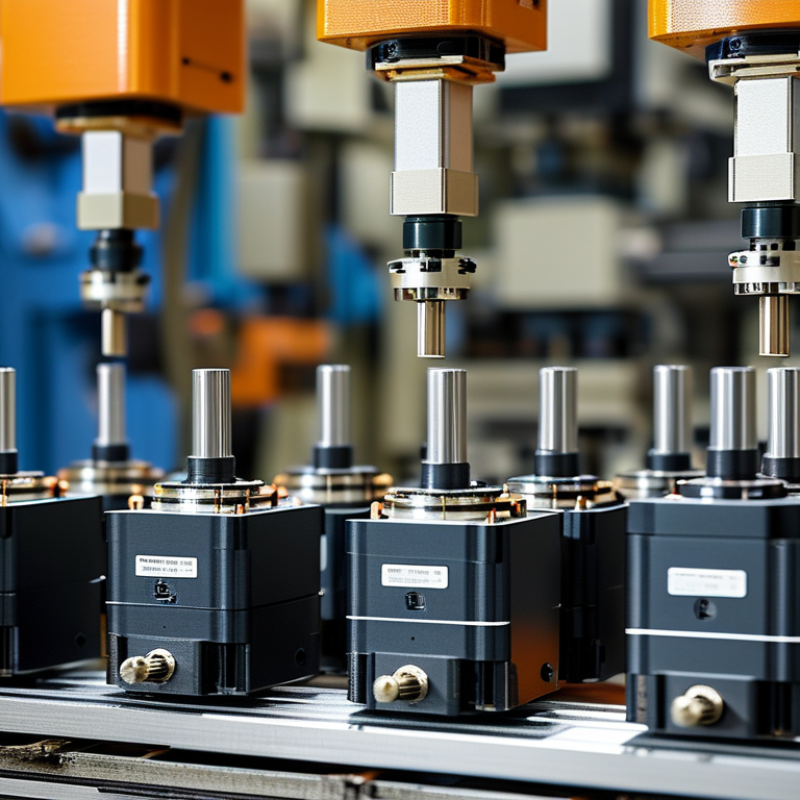
How to Choose the Right Precision Stepper Motor in 2026?

Define the Motion Requirements and Operating Conditions

How to Choose the Right Precision Stepper Motor in 2026?

Define the Motion Requirements and Operating Conditions

A precision stepper motor should match the machine’s actual motion profile, not only its catalog torque. Record load mass, travel distance, target speed, acceleration, positioning resolution, and movement frequency. A 2-kilogram slide moving 300 millimeters at 40 millimeters per second needs different performance from a camera axis making slow, tiny adjustments.

Keep it measurable.

Peak torque matters during acceleration, while continuous torque controls stable operation. Calculate the reflected load torque and leave a practical safety margin. Microstepping can improve smoothness, but it does not automatically guarantee equal position accuracy. Check the encoder requirement, backlash, coupling stiffness, and allowable settling time. A motor that reaches the position quickly may still create visible vibration.

Operating conditions can change the selection completely. Note supply voltage, driver current, ambient temperature, dust, humidity, installation angle, and duty cycle. In field testing, a motor may perform well for ten minutes but lose accuracy after hours of heat buildup. Holding torque alone can mislead. Thermal limits, resonance zones, and cable movement deserve equal attention.

My early sizing sheets focused too heavily on rated torque. That was a mistake. A smaller motor with better acceleration control may outperform a larger motor in a lightweight mechanism. Prototype the worst movement, measure temperature and missed steps, then revise the assumptions before production. Real conditions often expose what calculations overlook.

How to Choose the Right Precision Stepper Motor in 2026?

Define the motion requirements and operating conditions before selecting torque, speed, resolution, and thermal ratings.

The planning values below show typical torque-margin targets for common motion conditions. Final selection should be verified against the motor's torque-speed curve, acceleration profile, load inertia, duty cycle, and ambient temperature.

Compare Precision Stepper Motor Types and Performance Ratings

How to Choose the Right Precision Stepper Motor in 2026?

Compare motor types before comparing prices. Hybrid stepper motors usually provide finer positioning and stronger holding torque than permanent-magnet designs. Variable-reluctance motors can reach higher speeds, but their torque is often lower. For compact, low-load equipment, permanent-magnet types may remain practical. A 2024 MarketsandMarkets assessment valued the global stepper motor market at approximately USD 5.3 billion in 2023. It projects growth toward USD 7.1 billion by 2028, driven by automation and medical equipment demand.

Read performance ratings as a system, not isolated numbers. A 1.8-degree step angle gives 200 full steps per revolution. A 0.9-degree design doubles that basic resolution. However, microstepping does not guarantee equal positional accuracy. Check holding torque, detent torque, phase current, inductance, and the torque-speed curve. At 1,000 revolutions per minute, a motor rated for 2 N·m at rest may deliver far less torque. That difference matters.

Thermal behavior deserves field testing. IEC 60034-1 guidance supports careful temperature and duty evaluation, while a 2023 industrial motor systems report from the U.S. Department of Energy emphasizes efficiency, control, and operating conditions. Use the driver’s current limit and measure case temperature after repeated moves. A closed-loop stepper can reduce missed-step risk, but it adds encoder complexity and cost. I would not select by resolution alone. Real loads are rarely as clean as laboratory tables. Validate acceleration, friction, cable routing, and emergency stops with the actual mechanism. Small oversights become visible quickly.

Select the Appropriate Torque, Speed, and Resolution

How to Choose the Right Precision Stepper Motor in 2026?

Select the Appropriate Torque, Speed, and Resolution

Choosing a precision stepper motor starts with the actual load, not the advertised maximum torque. Measure friction, acceleration, gravity, and the inertia of connected parts. Add a practical safety margin, often 30% to 50%, for unexpected resistance. Holding torque is not the same as running torque. At higher speeds, available torque can fall sharply. Speed changes everything. Test the real load.

Match the motor’s torque curve to your operating speed, rather than checking one catalog value. A motor may lift a mechanism slowly but stall during rapid positioning. Calculate the required acceleration time and check whether the driver supplies suitable current. Heat also matters. A motor running near its limit may lose performance after prolonged operation. Temperature, mounting, and duty cycle deserve careful testing.

Resolution requires more than counting steps. Full-step accuracy depends on motor construction and mechanical transmission. Microstepping can improve smoothness, but it does not always create equal absolute accuracy. Check backlash, screw pitch, coupling flexibility, and encoder feedback when precision is critical. For example, a 1.8-degree motor with a 5 mm lead screw produces about 0.025 mm per full step. This estimate is useful, but real positioning error may be larger. Measure repeatability in the finished machine, because laboratory assumptions can mislead.

Check Driver, Controller, and System Compatibility

How to Choose the Right Precision Stepper Motor in 2026?

Choosing the right precision stepper motor in 2026 starts with compatibility, not peak holding torque. Match the motor’s rated current and phase resistance to the driver’s output range. A mismatch can cause overheating, vibration, missed steps, or weak acceleration. Check voltage headroom carefully. Digital drivers may offer microstepping, current control, and closed-loop feedback. However, microstepping alone does not guarantee accurate positioning.

The controller must also match the driver’s signal requirements. Confirm pulse voltage, maximum frequency, direction timing, and enable logic before wiring the system. A controller producing 5-volt pulses may not communicate reliably with a driver expecting another signal level. Keep cables short where possible, and separate motor wires from sensitive feedback lines. Small details matter.

System compatibility requires more than reading a torque chart. Compare load inertia, acceleration, operating speed, coupling stiffness, and available power supply capacity. A 1.8-degree motor can move smoothly at 1/16 microstepping, yet backlash may still reduce repeatability. Test the complete assembly under real load. Measure temperature after continuous operation, not only during a short demonstration. Engineers sometimes select a larger motor for safety, but excessive size can increase resonance and energy use. Recheck the choice after testing.

How to Choose the Right Precision Stepper Motor in 2026? - Check Driver, Controller, and System Compatibility
Selection Dimension Typical Engineering Data Driver Compatibility Check Controller Compatibility Check System-Level Recommendation
Motor Size and Frame Common hybrid stepper frame sizes include 42, 57, 60, 86, and 110 mm. Larger frames generally provide higher torque but increase mass and inertia. Confirm that the driver supports the motor's phase current and required supply voltage. The frame size alone does not determine electrical compatibility. Usually independent of the controller, provided the controller can generate the required pulse and direction signals. Select the smallest frame that meets the required torque, thermal, and mechanical stiffness targets.
Phase Current Typical two-phase stepper motors range from approximately 0.5 A to 8 A per phase. The rated current is normally specified for each winding. The driver's continuous and peak output current must meet the motor rating. Set the current limit to the motor manufacturer's rated phase current. Controller output does not normally power the motor directly; it sends motion commands to the driver. Do not connect a motor to a driver solely because the connector fits. Incorrect current settings can cause overheating or inadequate torque.
Motor Voltage and Supply Voltage Low winding voltage is common, often around 2–12 V, while the driver supply may commonly be 12–80 VDC. The driver supply range must include the planned DC bus voltage. A higher driver voltage can improve high-speed torque, but current limiting remains essential. The controller usually requires a separate logic supply, commonly 5 V or 24 VDC, depending on the interface. Verify motor winding voltage, driver bus voltage, logic voltage, grounding, and protective isolation as separate requirements.
Holding Torque Typical holding torque spans roughly 0.05–12 N·m across small to large hybrid stepper motors. The driver must deliver sufficient phase current at standstill without exceeding its thermal limit. The controller cannot compensate for insufficient motor torque through software alone. Choose a motor with a calculated torque margin, commonly at least 30% above the required static load torque.
Speed and Torque Requirement Stepper torque decreases as speed rises. Many applications operate below approximately 300–1,000 rpm, depending on motor size, load, and supply voltage. Check the driver's maximum step frequency, current regulation method, and supply voltage at the intended operating speed. The controller must generate pulses at the required frequency. Pulse frequency equals motor revolutions per second multiplied by steps per revolution and microstep setting. Use the motor's torque-speed curve rather than holding torque to validate acceleration and continuous operation.
Step Angle and Resolution A common full-step angle is 1.8°, equivalent to 200 full steps per revolution. Some precision motors use 0.9°, or 400 full steps per revolution. The driver must support the required microstep settings, such as 1, 2, 4, 8, 16, or higher subdivisions. Calculate command resolution from screw pitch, belt ratio, or gearbox ratio—not from microstep count alone. Microstepping improves motion smoothness, but it does not guarantee proportional improvement in absolute positioning accuracy.
Positioning Accuracy Typical open-loop stepper accuracy is often specified around ±3 to ±5% of one full step, before mechanical errors are added. Open-loop drivers cannot detect lost steps. Closed-loop drivers require an encoder with compatible signal type and resolution. The controller must support position feedback, alarm inputs, or servo-style command modes when closed-loop operation is required. Include backlash, screw lead error, belt elasticity, thermal expansion, and load variation in the complete accuracy budget.
Encoder Requirement Incremental encoders may provide A/B quadrature signals, often with an index signal. Resolution is commonly specified in pulses per revolution or counts per revolution. Confirm encoder voltage, line-driver or open-collector output, maximum input frequency, and whether the driver supports closed-loop correction. Check whether the controller accepts differential A/B signals, single-ended signals, index input, and fault feedback. Use an encoder when missed-step detection, position correction, or reliable operation under changing loads is important.
Driver Control Interface Common interfaces include pulse/direction, clockwise/counterclockwise pulse, analog command, and fieldbus control. Match input voltage levels, input polarity, isolation type, pulse width, maximum frequency, and enable or alarm logic. Confirm that the controller can output the selected command format and electrical level without an external signal converter. Pulse/direction is widely interoperable; networked control can reduce wiring but requires protocol and configuration compatibility.
Microstepping and Pulse Frequency At 200 full steps per revolution and 16 microsteps, one revolution requires 3,200 command pulses. The driver must accept the required pulse rate and maintain current regulation at the selected microstep setting. For 1,000 rpm at 3,200 pulses per revolution, the controller must generate approximately 53.3 kHz pulse frequency. Verify controller timing capacity and cable signal integrity before selecting a high microstep ratio.
Acceleration and Inertia Motor performance depends on reflected load inertia, acceleration rate, friction, and resonance. Excessive load inertia can cause step loss. Some drivers provide resonance suppression, anti-stall detection, or automatic current adjustment; these features must be verified for the selected motor. The controller should support configurable acceleration and deceleration profiles, such as trapezoidal or S-curve motion. Use controlled acceleration and avoid abrupt starts when the load-to-motor inertia ratio is high.
Resonance and Vibration Mechanical resonance can occur in the low- to mid-speed range, particularly near the motor's natural frequencies. Check for current shaping, damping, resonance suppression, and selectable anti-resonance functions. The controller can reduce excitation by using smooth profiles and avoiding repetitive operation at known resonance speeds. Consider a mechanical damper, flexible coupling, higher microstepping, or closed-loop control when vibration affects accuracy or noise.
Thermal Performance Stepper motors commonly run warm because current can remain present while stationary. Temperature rise depends on current, duty cycle, mounting, and ambient conditions. Verify continuous current capability, over-temperature protection, idle-current reduction, and cabinet cooling requirements. The controller should provide enable, standby, and fault-handling logic where thermal protection affects machine operation. Measure winding and housing temperature under the actual duty cycle; do not rely only on no-load testing.
Mechanical Interface Check shaft diameter, shaft length, keyway, mounting pattern, pilot diameter, connector orientation, and allowable radial and axial loads. Driver compatibility is electrical, but incorrect mechanical loading can still cause premature bearing or coupling failure. Confirm that the controller's motion scale matches the transmission pitch, gear ratio, and axis direction. Use a correctly sized coupling and avoid applying belt tension or axial force beyond the motor's mechanical limits.
Environmental Rating Operating temperature, humidity, dust, oil, vibration, and washdown exposure determine the required enclosure and protection level. The driver enclosure and cooling method must suit the installation environment and dissipate generated heat. Control cabinet components must meet the same environmental and electromagnetic compatibility requirements as the machine. Specify ingress protection, cable shielding, grounding, and thermal management before final motor selection.
Safety and Fault Handling Relevant functions may include overcurrent, overvoltage, undervoltage, over-temperature, encoder fault, following error, and emergency stop behavior. Confirm fault outputs, safe disable behavior, regenerative energy handling, and restart conditions. The controller should monitor driver alarms and define a safe response for stop, reset, and homing after a fault. Do not use software limits as a substitute for required hardware safety circuits or correctly designed emergency-stop functions.
Final Compatibility Gate Required documentation includes motor phase data, torque-speed curve, driver electrical limits, encoder specifications, controller interface details, and wiring diagrams. Approve only when current, voltage, pulse interface, encoder signals, protection functions, and thermal limits are all matched. Approve only when command frequency, motion profile, feedback handling, I/O voltage, and homing functions are supported. Test the complete motor-driver-controller combination with the real load, cable length, acceleration, duty cycle, and environmental conditions.

Evaluate Reliability, Installation, and Long-Term Operating Costs

How to Choose the Right Precision Stepper Motor in 2026?

Reliability begins with the real machine cycle, not the catalog torque. Record acceleration, load inertia, ambient temperature, duty cycle, and stopping frequency. A motor that survives testing may still overheat during an eight-hour production shift. Check the thermal curve at the actual mounting position. Enclosed frames can trap heat.

Installation quality directly affects precision. Confirm shaft alignment, mounting stiffness, cable shielding, grounding, and connector access before ordering. Follow the motor supplier’s wiring limits and applicable IEC requirements. Excessive vibration can create missed steps and shorten bearing life. I have seen a small alignment error become a costly repeatability problem. It was not obvious at startup.

Operating cost deserves equal attention. The U.S. Department of Energy’s Motor Systems Market Assessment reports that motor-driven equipment uses roughly 50–70% of industrial electricity. A lower-priced motor may consume more energy under continuous load. The DOE Operations & Maintenance Best Practices Guide estimates that effective maintenance can reduce energy use by 5–20%. Compare current draw, drive compatibility, replacement time, and service access over several years. Include downtime. It is often underestimated. Selective preventive checks, temperature logging, and quarterly connector inspections can expose problems early. Still, these intervals need adjustment after real production data arrives. A spreadsheet cannot replace field observation. Reference: U.S. DOE, Motor Systems Market Assessment, 2021; U.S. DOE, Operations & Maintenance Best Practices Guide, 2010.

FAQS

What information should I collect before choosing a precision stepper motor?

Record load mass, travel distance, target speed, acceleration, resolution, and movement frequency. A 2-kilogram slide moving 300 millimeters needs careful sizing. Slow camera adjustments require different performance. Keep the requirements measurable.

Why is rated holding torque not enough?

Holding torque describes stationary resistance, not complete motion performance. Peak torque matters during acceleration. Continuous torque controls stable operation. I once focused too heavily on rated torque. That was a mistake.

How much safety margin should the motor have?

Calculate reflected load torque and add a practical safety margin. Avoid selecting a motor barely matching the calculated value. A larger motor is not always better. Control quality can matter more.

Does microstepping guarantee better positioning accuracy?

Microstepping can make movement smoother and reduce visible vibration. It does not automatically provide equal position accuracy. Check encoder needs, backlash, coupling stiffness, and settling time. Smooth motion can still miss the target.

Which operating conditions can change the motor selection?

Check supply voltage, driver current, temperature, dust, humidity, mounting angle, and duty cycle. Cable movement also deserves attention. A motor may work for ten minutes, then lose accuracy after heating. Heat matters.

How can I identify overheating and reliability problems?

Test the worst movement under realistic production conditions. Measure motor temperature, missed steps, vibration, and stopping behavior. A short test may hide problems during an eight-hour shift. Repeat longer tests.

What installation details affect precision?

Confirm shaft alignment, mounting stiffness, cable shielding, grounding, and connector access. Even a small alignment error can damage repeatability. Excessive vibration may shorten bearing life. Startup can look normal.

How should I compare long-term operating costs?

Compare current draw, driver compatibility, replacement time, maintenance access, and expected downtime. A cheaper motor may consume more energy under continuous load. Log temperatures and inspect connectors periodically. Spreadsheets help, but field data can disagree.

Conclusion

Choosing the right Precision Stepper Motor in 2026 begins with a clear understanding of the application’s motion requirements and operating conditions. Define the needed travel distance, positioning accuracy, load, duty cycle, ambient temperature, vibration, and available installation space. Then compare motor types and performance ratings, including torque characteristics, step angle, holding force, heat generation, and efficiency. These factors help determine whether the motor can deliver stable and repeatable movement in real operating conditions.

Next, match the motor’s torque, speed, and resolution to the system’s actual workload rather than relying only on maximum ratings. Confirm compatibility with the driver, controller, voltage, current, feedback method, and communication interface. Finally, evaluate reliability, mounting requirements, maintenance needs, noise, energy consumption, and total operating costs. A well-selected Precision Stepper Motor should provide consistent performance, straightforward integration, and dependable long-term value without unnecessary overspending or excessive capacity.

Madeline

Madeline

Madeline is a dedicated marketing professional with a wealth of expertise in our company's core offerings. With a keen understanding of the industry, she brings a unique perspective to her role, consistently delivering high-quality content that highlights the superior aspects of our products. As......