China’s Industrial DC Motor sector combines mature manufacturing with rapid engineering improvement. Its products serve conveyors, cranes, elevators, machine tools, and automated production lines. Behind every motor are practical decisions about torque, speed control, brush life, cooling, and maintenance access.
This introduction examines ten leading Chinese manufacturers through an engineering-focused lens. The selection considers production capability, customization experience, quality systems, testing equipment, export performance, and after-sales support. Factory visits and technical evaluations often reveal more than polished brochures. A motor may look impressive, yet its commutator finish, bearing noise, and thermal behavior tell a clearer story.
Michael Faraday, a foundational authority in electrical science, said, “Nothing is too wonderful to be true, if it be consistent with the laws of nature.” His words remain relevant to Industrial DC Motor design. Reliable performance still depends on measurable principles, not marketing claims.
Each featured company brings different strengths. Some focus on compact permanent-magnet motors. Others specialize in high-torque industrial systems, geared solutions, or customized voltage ranges. Their products may suit different operating environments. No ranking is perfect. Buyer priorities change with load cycles, ambient temperature, duty ratings, and service conditions.
This guide therefore avoids treating “top” as an absolute label. It offers a practical starting point for engineers, distributors, and industrial buyers. Readers should verify efficiency data, insulation class, warranty terms, spare-parts availability, and compliance documentation before purchasing. Small details matter. A poorly matched Industrial DC Motor can create heat, downtime, and unexpected maintenance costs.
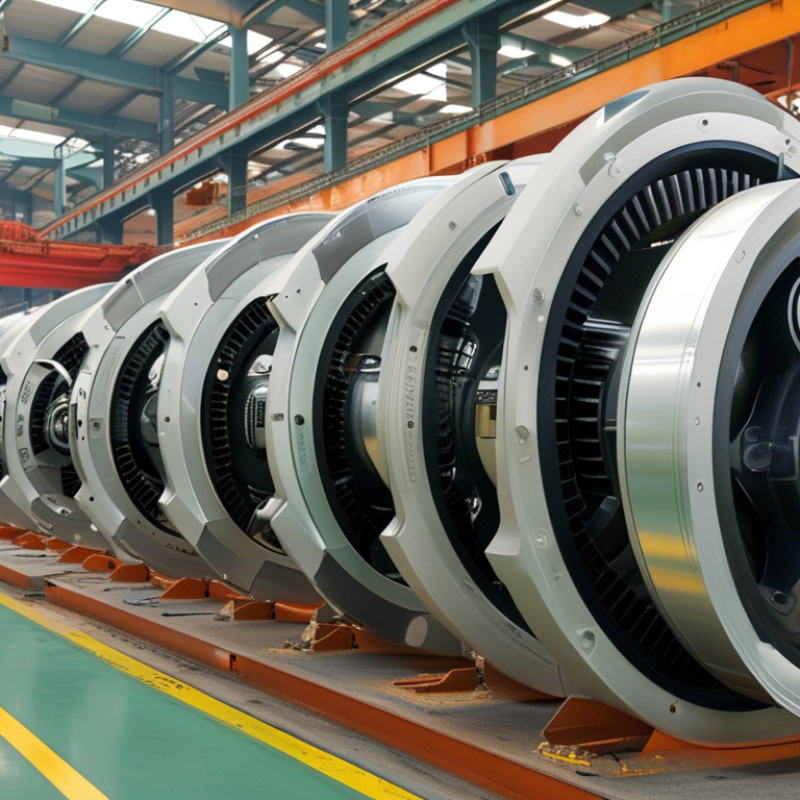
China’s industrial DC motor sector covers brushed DC motors, brushless DC motors, servo drives, controllers, and integrated motion systems. The boundary is not perfectly clean. Some market reports classify brushless units as electronically commutated motors instead. For a top-ten manufacturer review, evaluation should include motor design, winding quality, magnet sourcing, controller compatibility, testing, and after-sales engineering.
Industrial demand comes from conveyors, cranes, robotics, machine tools, warehouse systems, and mobile equipment. The International Energy Agency reports that electric motor-driven systems consume about 53% of global electricity. This figure explains why efficiency, controllability, and heat management matter beyond purchase price. China’s manufacturing base also benefits from deep supply chains for copper wire, magnets, bearings, castings, and power electronics. However, production scale does not automatically prove reliability. Field testing still matters.
Tips: Ask for duty-cycle data, thermal-rise results, insulation ratings, noise figures, and lifetime test methods. Check whether efficiency claims follow IEC 60034 testing rules. Request samples under real loads, not only catalog conditions. China’s industrial motor market is broad, but specifications can vary between factories. A careful buyer should compare identical operating points, because “rated power” alone can hide major performance differences. Useful references include the IEA’s Electric Motor Systems analysis, IEC 60034 standards, and China Electrical Equipment Industry Association publications.
China Top 10 Industrial DC Motor Manufacturers
Criteria for Ranking China’s Leading Industrial DC Motor Manufacturers
A credible ranking starts with measurable engineering performance, not marketing claims. We examine rated torque, speed stability, efficiency, brush life, and thermal resistance. Test data should cover continuous, intermittent, and overload duty cycles. A motor running beside a hot steel press faces different demands from one driving a conveyor. That difference matters.
Factory capability is another important measure. We look for controlled winding processes, balanced rotors, insulation testing, vibration checks, and documented final inspections. Certification helps, but it does not replace practical evidence. Manufacturers should provide drawings, tolerance records, and traceable test reports. We also assess customization experience, including shaft dimensions, mounting patterns, encoder integration, and braking requirements.
Field reliability carries greater weight than attractive samples. Service records, replacement-part availability, response times, and technical support reveal how a supplier performs after delivery. Stable supply chains and clear warranty procedures also reduce operational risk. No ranking is perfectly objective. Some production data remains difficult to verify independently, and factory visits may show only selected lines. A careful evaluation should therefore compare several production batches, speak with users, and review failures honestly. Small issues, such as connector looseness or excessive brush dust, may expose weaknesses that headline specifications conceal.
| No. | Ranking Criterion | Weight | What Is Evaluated | Objective Evidence or Reference | Recommended Scoring Method |
|---|---|---|---|---|---|
| 1 | Product Reliability and Service Life | 20% | Continuous-duty performance, insulation durability, bearing reliability, thermal stability, vibration control, and documented failure rates. | IEC 60034-1; IEC 60034-14; verified test reports; warranty and after-sales records. | Score 0–10 according to the completeness and credibility of endurance, vibration, temperature-rise, and failure-rate data. |
| 2 | Engineering and Customization Capability | 15% | Ability to design customized torque, speed, voltage, mounting, enclosure, shaft, brake, encoder, and cooling configurations. | Technical drawings, application-engineering records, prototype procedures, and documented customization cases. | Score 0–10 based on design resources, prototype capability, engineering response time, and customization depth. |
| 3 | Manufacturing Capacity and Process Control | 12% | Production capacity, winding and balancing equipment, automated testing, traceability, process inspection, and delivery consistency. | Factory audit results, production records, calibration certificates, quality-control procedures, and delivery-performance data. | Score 0–10 based on production scalability, automation level, process repeatability, and documented inspection controls. |
| 4 | Quality Management System | 10% | Formal quality planning, corrective-action systems, supplier management, incoming inspection, and nonconformance control. | A valid ISO 9001 certificate issued by an accredited certification body and supporting audit documentation. | Score 0–10 according to certification validity, audit transparency, quality records, and corrective-action effectiveness. |
| 5 | Product Range and Technical Coverage | 10% | Coverage of brushed and brushless DC motors, permanent-magnet motors, traction motors, servo-related applications, and industrial drive systems. | Published datasheets, rated operating conditions, torque-speed curves, voltage options, enclosure ratings, and mounting standards. | Score 0–10 based on model breadth, power coverage, operating-speed range, and suitability for industrial applications. |
| 6 | Safety, EMC, and Environmental Compliance | 10% | Electrical safety, electromagnetic compatibility, insulation system, ingress protection, restricted substances, and environmental management. | IEC 60034 series; IEC 60529 for IP ratings; applicable EMC test reports; ISO 14001; RoHS or equivalent declarations where required. | Score 0–10 according to the availability, validity, and scope of third-party reports and compliance documentation. |
| 7 | Energy Efficiency and Thermal Performance | 8% | Efficiency, heat dissipation, operating temperature, cooling method, standby losses, and performance under continuous industrial duty. | IEC 60034-2-1; efficiency test reports; temperature-rise data; thermal design calculations. | Score 0–10 based on verified efficiency data, thermal margins, cooling options, and suitability for continuous operation. |
| 8 | Export Experience and Supply-Chain Capability | 6% | Export documentation, packaging standards, lead-time control, international logistics, spare-parts availability, and multilingual technical support. | Export records, shipping documentation, packaging specifications, service procedures, and customer-support response records. | Score 0–10 based on export consistency, logistics capability, delivery reliability, and international service coverage. |
| 9 | After-Sales Service and Technical Support | 5% | Warranty terms, commissioning assistance, troubleshooting, replacement-parts support, repair procedures, and response time. | Published warranty policy, service-level procedures, spare-parts lists, technical manuals, and support records. | Score 0–10 based on warranty clarity, service accessibility, response time, and long-term parts support. |
| 10 | Commercial Transparency and Total Cost of Ownership | 4% | Quotation transparency, minimum order requirements, tooling charges, maintenance needs, expected service life, and lifecycle cost. | Formal quotations, technical-commercial terms, maintenance schedules, warranty exclusions, and lifecycle-cost calculations. | Score 0–10 based on quotation completeness, cost predictability, maintenance requirements, and total ownership value. |
| Ranking formula: Weighted Score = Σ (Criterion Score ÷ 10 × Criterion Weight). A defensible top-10 ranking should use current certificates, test reports, factory-audit evidence, and customer-performance data rather than company size or unverified marketing claims. | |||||
China’s top ten industrial DC motor manufacturers reflect a broad engineering landscape. These profiles cover suppliers serving conveyors, cranes, machine tools, elevators, and battery-powered equipment. Their products commonly include brushed DC motors, permanent-magnet motors, and geared drive units. Selection should examine torque curves, insulation class, duty cycle, and thermal limits.
Several manufacturers focus on customized motors for steel plants and port machinery. Their engineering teams often adjust shaft dimensions, mounting holes, brushes, and cooling systems. Others produce compact motors for medical devices, warehouse automation, and mobile platforms. Factory visits can reveal practical details, such as winding cleanliness, balancing equipment, and end-of-line load testing. Ask for test records.
Reliability varies.
Some suppliers maintain strong export documentation and traceable component batches. Others provide impressive samples but weak after-sales support. This difference matters during continuous operation. A motor that passes a short workshop test may still overheat after six hours under heavy load. Buyers should request noise data, vibration limits, replacement-part availability, and field references. Certification documents also require careful checking, because outdated files can create false confidence.
These profiles are useful starting points, not final proof. Performance depends on the application, installation quality, and maintenance discipline.
China Top 10 Industrial DC Motor Manufacturers: Product Range, Technical Capabilities, and Industry Applications
China’s top ten industrial DC motor manufacturers typically offer brushed, brushless, permanent-magnet, and geared DC motors. Their product ranges cover small control motors and heavy-duty traction units. According to the U.S. Department of Energy, motor-driven equipment consumes more than half of industrial electricity in many facilities. This makes efficiency, service life, and controllability practical purchasing criteria, not marketing details. Common applications include cranes, conveyors, printing lines, mining equipment, robotics, and battery-powered vehicles.
Technical capability differs significantly across suppliers. Strong manufacturers provide electromagnetic design, thermal simulation, shaft balancing, insulation testing, and load-cycle validation. Some factories support encoder feedback, regenerative braking, IP-rated housings, and customized mounting dimensions. Brushless models suit clean automation systems, while brushed motors remain useful where simple control and lower initial cost matter. The International Energy Agency reports that electric motor systems account for roughly half of global electricity consumption, although this figure covers multiple motor types. It still highlights the value of precise speed control and efficient system integration. Performance claims need independent testing.
Tips: Request efficiency curves, rated-duty definitions, noise data, and temperature-rise results. Ask for testing records from a recent production batch. A prototype may perform well, yet long-term commutation wear can expose weaknesses. Do not compare prices alone. Review spare-parts access, controller compatibility, and field-service response before selecting a supplier. Some published specifications are incomplete. That deserves scrutiny.
The chart presents representative upper-end continuous power ratings commonly specified for industrial DC motor applications. Large DC motors are typically used in rolling mills, marine propulsion, cranes, conveyors, machine tools, printing equipment, and elevator systems where high starting torque and precise speed control are required. Values are application-level engineering ranges and do not represent any individual company or brand.
Selecting a Chinese DC motor manufacturer requires more than comparing quotations. The International Energy Agency reports that electric motor systems consume about 53% of global electricity. Efficiency, therefore, affects both operating cost and carbon exposure. Ask for measured efficiency, torque-speed curves, thermal test results, and compliance with IEC 60034 testing methods. A low price can hide weak insulation or unstable bearings.
A reliable evaluation starts with factory evidence. Review winding-resistance records, rotor-balancing data, load-test samples, and serial-number traceability. Check whether the supplier controls magnets, shafts, brushes, and commutators consistently. Request an independent inspection before shipment. ISO 9001 certification is useful, but it does not prove motor performance. I would also test several samples under your actual voltage, duty cycle, ambient temperature, and starting load. Datasheets can look excellent. Field conditions are less polite.
Tips: Compare total ownership cost, not only unit price. Confirm warranty response time, spare-part availability, and production capacity. Ask for references from similar applications, while checking them independently. Keep acceptance criteria in the purchase contract. One overlooked detail matters: define allowable noise, vibration, temperature rise, and speed variation before ordering. A factory visit helps, but a rushed visit may still miss process weaknesses. Records reveal more than polished meeting rooms.
: The sector includes brushed motors, brushless motors, servo drives, controllers, and integrated motion systems. Some boundaries overlap.
Typical applications include conveyors, cranes, robotics, machine tools, warehouse systems, and mobile equipment. They need controlled motion.
Look for electromagnetic design, winding control, thermal simulation, shaft balancing, and insulation testing. Testing depth matters.
Compare identical loads, speeds, duty cycles, and temperatures. Rated power alone can hide meaningful differences.
Request efficiency curves, thermal-rise data, noise figures, insulation ratings, and lifetime test methods. Ask for recent batch records.
Not always. Brushless motors suit clean automation and precise control. Brushed motors may offer simpler control and lower initial cost.
Motor-driven systems use substantial electricity in industrial facilities. Efficient motors can reduce operating losses and thermal stress. Purchase price is incomplete.
Test samples under real operating loads, rather than catalog conditions alone. A prototype may perform well. Long-term wear may reveal weaknesses.
Review controller compatibility, spare-parts access, customization support, and field-service response. A reliable motor still needs support.
No. Strong supply chains support copper wire, magnets, bearings, castings, and electronics. Scale is not proof. Field testing remains necessary.
China’s industrial DC motor sector covers a broad range of manufacturers serving automation, material handling, mining, transportation, energy, marine equipment, and other demanding applications. This overview explains the market scope and defines the main product categories, while presenting a practical framework for ranking leading manufacturers. Key evaluation factors include production capacity, engineering expertise, quality management, customization capabilities, delivery reliability, after-sales service, and compliance with relevant international standards.
The profiles of the top ten Chinese manufacturers highlight differences in product range, technical capabilities, operating environments, and application experience without focusing on brand promotion. Readers will also learn how to compare motor power, voltage, speed control, efficiency, protection level, cooling method, maintenance requirements, and integration options. By assessing technical support, testing procedures, communication, total ownership cost, and long-term cooperation potential, buyers can make a more informed decision when selecting a suitable Industrial DC Motor manufacturer for specific operational and performance requirements.
